
ACES Renewables Expands Allied Steelrode's Alrode Solar Capacity to 1.08 MWp with 2.8 MWh of Battery Storage
For industrial operations with heavy daytime demand, the combination of solar and battery storage is becoming an increasingly practical way to manage electricity costs.
ACES Renewables has completed an expansion of the solar PV system at Allied Steelrode in Alrode, Gauteng. The project adds a 480 kWp rooftop PV extension to the site's existing 600.75 kWp system, bringing combined PV capacity to 1,080.75 kWp. It also introduces 1 MW of battery power conversion capacity and 2.8 MWh of nominal storage. The extension was commissioned in September 2026.
The project shows how an established solar installation can be extended with storage to better match the way an industrial site uses energy.
Why Allied Steelrode Added Solar and Storage
The objective was to reduce purchased electricity and manage peak-period energy costs by combining rooftop solar with battery storage.
A load assessment of the site examined morning and evening demand, supporting the case for energy shifting. Allied Steelrode has substantial operating demand, including:
• Average grid power of 526 kW at 07:00 and 507 kW at 08:00
• A maximum recorded demand of 714 kVA
Solar can serve operating loads during daylight hours, while the battery can store energy and release it during higher-cost periods. Together, they reduce the site's reliance on grid electricity when it is most expensive.
A Rooftop Solution Designed Around the Site
The new PV array is rooftop mounted. This uses the existing industrial roof space and keeps ground areas free for operations.
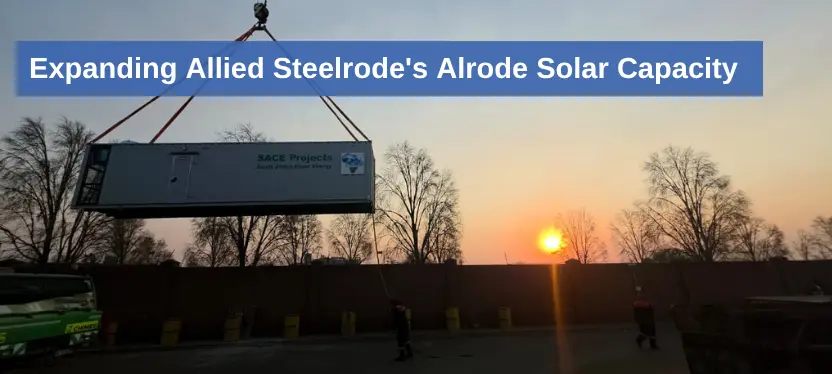
The battery and power conversion equipment are housed separately in two ground-level containers. The container layout considers nearby transformers, generator and diesel storage, with specified separation distances and fire protection provisions.
The design also considered roof geometry, panel spacing, access clearances, string routing and integration with the site's existing electrical supply. Roof loading, wind resistance, dust and cleaning remain important engineering considerations for any industrial rooftop installation.
The panels are secured with aluminum roof clamps on a short-rail mounting system. This approach is lightweight and cost-effective. The system is also modular, so additional capacity can be added in future.
System Specifications
The expanded installation comprises the following:
• 480 kWp DC new rooftop PV extension, using 667 × 720 Wp solar modules
• 600.75 kWp DC existing PV system, using 445 Wp modules (approximately 1,350 modules)
• 1,080.75 kWp DC total PV capacity
• 2 × ATESS PCS500 bidirectional converters, rated at 500 kW each (1,000 kW combined conversion capacity)
• 4 × ATESS SMC200 solar charge controllers
• 5 × Huawei SUN2000-100KTL existing PV inverters, providing 500 kW of existing PV inverter capacity
• 2.8 MWh nominal battery storage in two ground-level containers
• Aluminium roof clamps and a short-rail mounting system
• Approximately 773 MWh of electricity generation in the first year
Actual energy production will depend on solar conditions, equipment performance and how the system is operated over time.
How Solar and Storage Work Together
The existing PV system and its Huawei inverters continue to supply the site's daytime loads. The new array and the ATESS equipment add a second layer. The charge controllers manage the solar input, and the bidirectional converters move energy to and from the battery.
This allows the site to use solar energy as it is generated, store energy, and discharge it during the morning and evening periods when demand is high. Because the converters are bidirectional, the same equipment handles both charging and discharging.
Delivering the Project
Work on the extension began in April 2026 and the system was commissioned in September 2026 The project builds on ACES Renewables' earlier solar installation at the site, which Allied Steelrode has now expanded with additional PV capacity and storage.
Environmental Benefits
Solar PV generates electricity without burning fuel during operation, and displacing grid electricity can reduce a site's carbon footprint. A verified annual CO₂ reduction figure for the expansion has not yet been established. Any published emissions or coal-saving figures will need to be calculated using the project's final net energy yield and a documented emissions baseline.
Strengthening ACES Renewables' Commercial and Industrial Portfolio
The Allied Steelrode expansion adds to ACES Renewables' growing portfolio of commercial and industrial solar and storage projects. It also shows the value of working with a client over time, from an initial solar installation to a larger system that includes battery storage.
For Allied Steelrode, the expanded system provides more on-site generation and a way to manage costs across the working day. For ACES Renewables, it is another step in delivering practical, scalable energy solutions for industrial customers across Africa.
ACES Renewables is a premier provider of renewable energy solutions across Africa. With over 17 years of experience, we are driving the continent's energy transition through innovative and sustainable clean energy solutions.Our expertise spans end-to-end project execution, including engineering, procurement and construction (EPC), energy optimisation and advanced storage solutions. With a proven track record and strong local partnerships, ACES Renewables delivers scalable projects that address Africa's growing energy needs while promoting environmental sustainability and economic growth.By consistently demonstrating the success and impact of our projects, ACES Renewables is attracting forward-thinking investors eager to participate in Africa's energy future, creating jobs, uplifting local communities, improving health and cleaning the environment. Our strategic vision and commitment to excellence position us as a trusted partner for those seeking to contribute to a cleaner, greener and more prosperous continent.
Frequently Asked Questions About the Allied Steelrode Solar and Battery Project
1. What did ACES Renewables install at Allied Steelrode in Alrode?
ACES Renewables added a 480 kWp rooftop PV extension to the existing 600.75 kWp system, bringing total PV capacity to 1,080.75 kWp. The project also includes 1 MW of battery power conversion capacity and 2.8 MWh of nominal storage.
2. Why did Allied Steelrode add battery storage?
The aim was to reduce purchased electricity and manage peak-period energy costs. The site has substantial morning and evening demand, and storage allows solar energy to be shifted into those higher-cost periods.
3. How much electricity will the system generate?
First-year generation is estimated at approximately 773 MWh. Actual output will depend on solar conditions and equipment performance.
4. Where is the battery located?
The battery and power conversion equipment are housed in two ground-level containers, separate from the rooftop PV array. The layout allows for separation from nearby transformers, a generator and diesel storage, with fire protection provisions.
5. Can the system be expanded in future?
Yes. The mounting system and overall design are modular, so additional capacity can be added.
Latest Industry News
IPP successfully lists on the Stock Exchange of Mauritius
Green developers look to other provinces as Northern Cape's power grid runs out of capacity
Royal Bafokeng Platinum plans to equip its Rustenburg platinum mine with a 30MW solar power plant
Bring Your Vision to Life—Start Your Project Today
We have the Right Business Model, the Right Team and the Right Partners